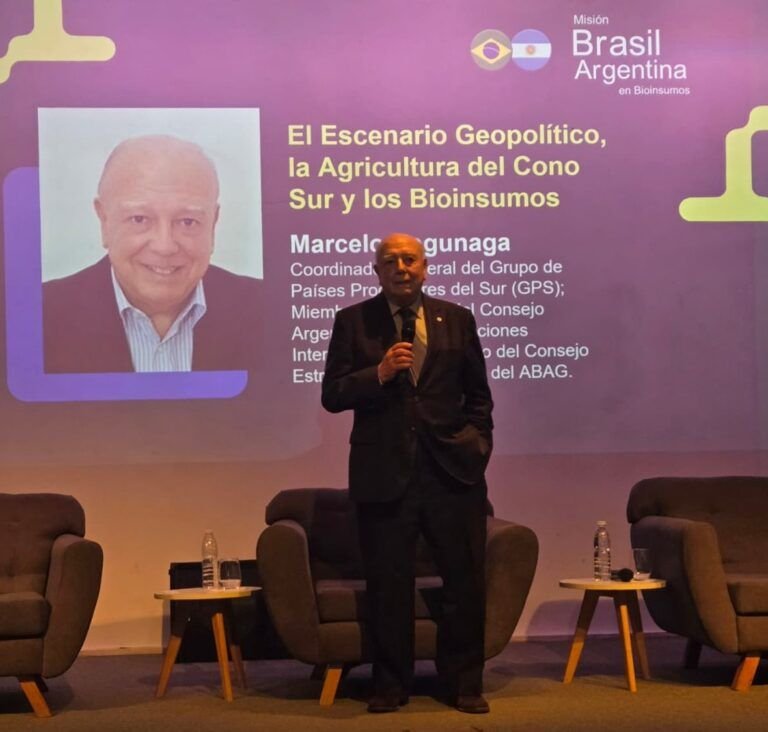
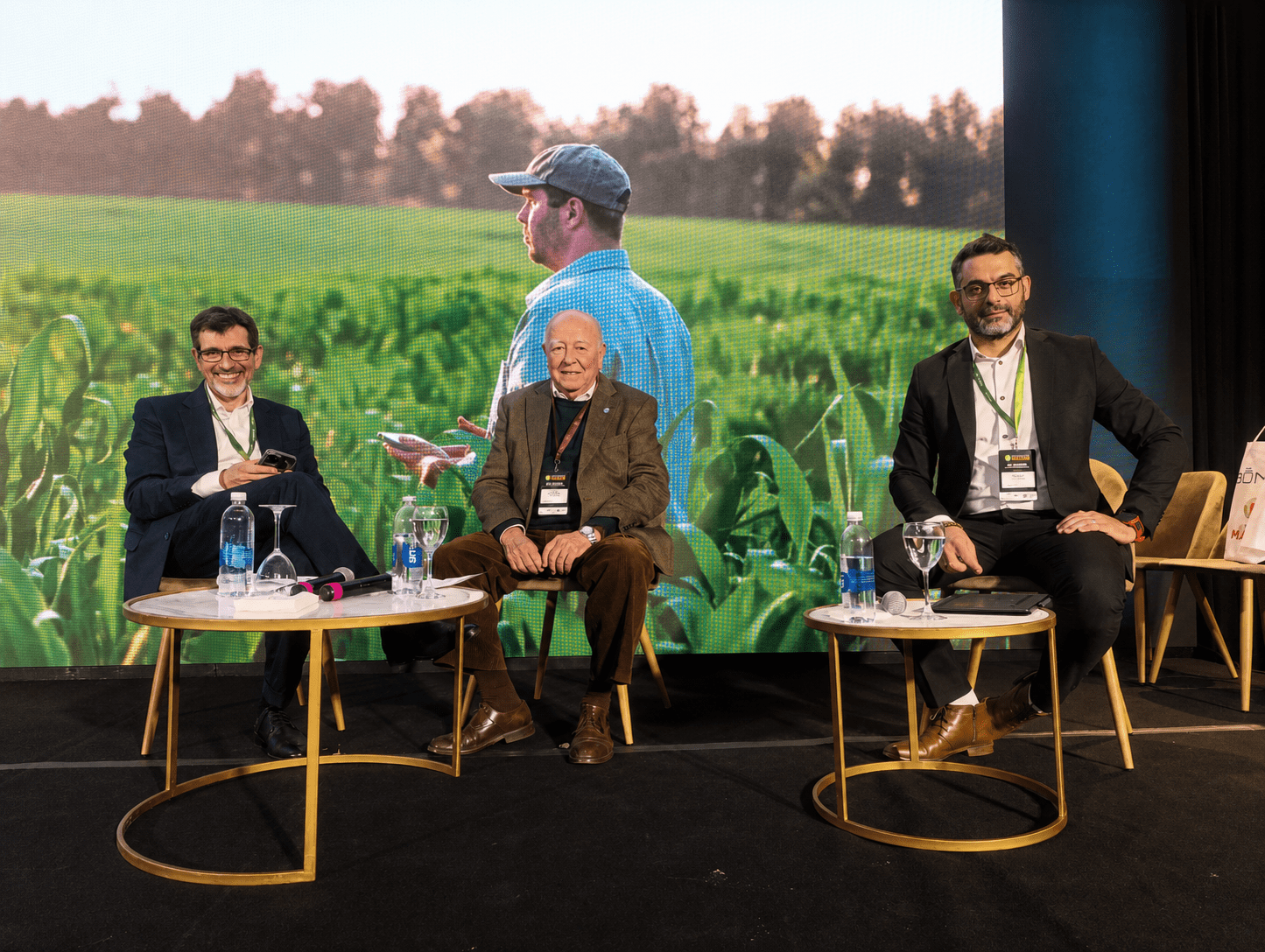
At the Maizar 2026 Congress, the panel "Agribusiness in a Geopolitical Key" brought together Marcelo Regúnaga, General Coordinator of the Group of Southern Producer Countries (GPS) and former Secretary of Agriculture, and Juan Battaleme, former Secretary of International Affairs of the Ministry of Defense, to discuss how the new world order redefines the challenges and opportunities of the sector..
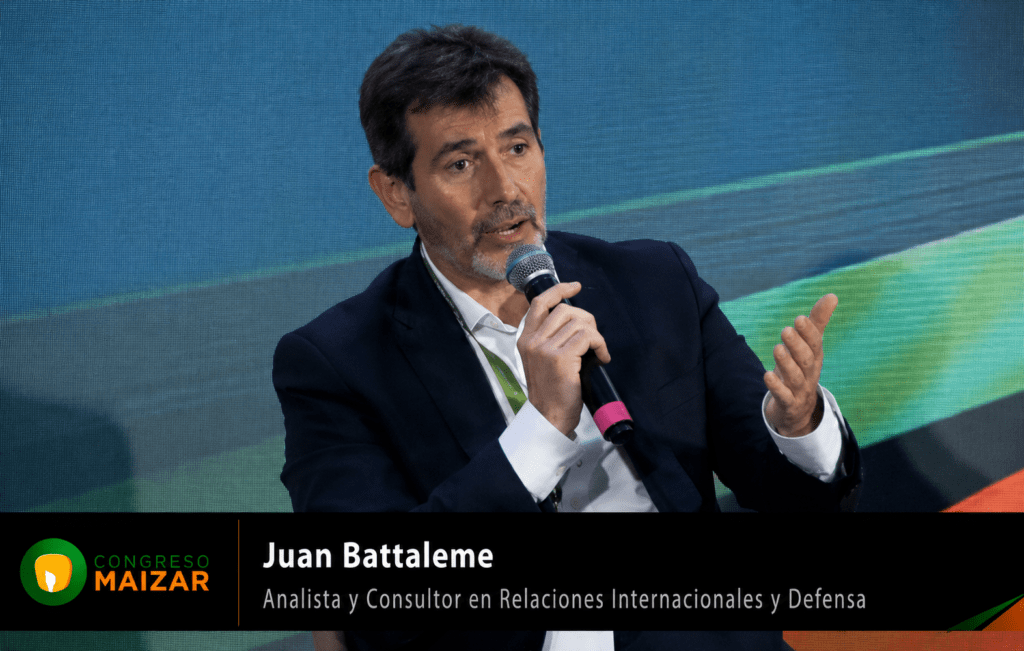
Battaleme opened the debate with a conceptual warning: talking about "transition" can be misleading, because today that transition leads nowhere clear. In this context of growing disorder, what prevails is no longer price competition but the search for reliable suppliers and the struggle for control of global trade flows. China is moving toward food self-sufficiency due to distrust in its supply chains; Russia is using its agricultural production to buy political influence in Africa; and the Munich Security Conference included, for the first time, a chapter dedicated to food security, where Argentina appears as a partner of interest to the transatlantic world.
On that map, the country possesses exceptional conditions: a zone of peace, bi-oceanic access, abundant natural resources, and productive capacity in food, minerals, and energy. "The geographical location at this moment offers a unique opportunity, almost like in the First and Second World Wars," Battaleme stated.
Regúnaga agreed with the diagnosis and added the economic dimension. Mercosur as a whole—and Argentina in particular—is a food powerhouse in a peaceful region, with access to two oceans and products with emerging global demand. However, he cautioned that these strengths do not automatically translate into power or wealth: "The key is to build the narrative and position ourselves to expand our capacity and add value to everything we produce today."
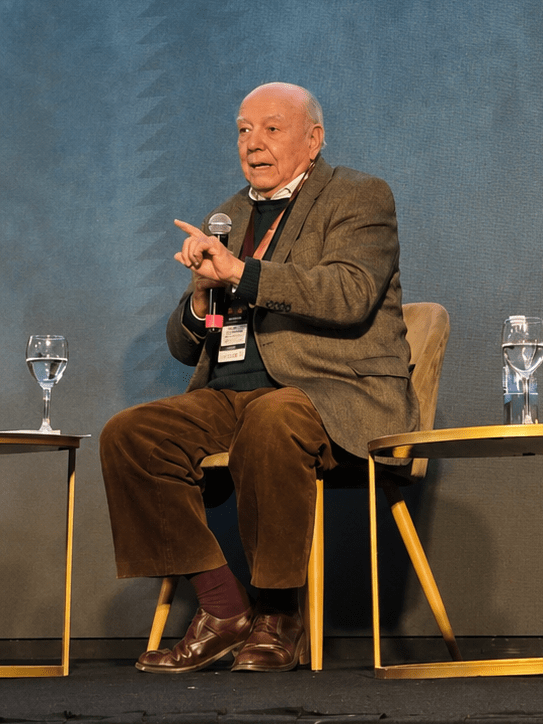
That narrative, he emphasized, should be the foundation of a major national development project centered on agribusiness. Not as an extractive sector, but as an instrument of foreign policy and a driver of growth.
One of the most concrete points of discussion was the value gap between Argentine exports and those of its competitors. Regúnaga was direct: Argentina's average export price is less than half that of Australia and Malaysia, and 30% less than Brazil's. "Australia is playing at the highest international standards. We're not yet," he pointed out.
The recipe for closing that gap involves advancing on three simultaneous fronts: active trade negotiations and international promotion; value-added processing in quality, biofuels, meat, and bioproducts; and differentiation through traceability and certifications. With these policies, he projected that agro-industrial exports could scale from the $80 billion projected for the next decade to between $100 billion and $120 billion by 2035. "If we were to achieve half of what Australia is doing, we would be talking about $120 billion in exports," he estimated.
Battaleme reinforced this point from a geopolitical perspective: in times of turmoil, being a reliable supplier has added value that Argentina is not yet capitalizing on. "We have the product, but we aren't communicating that in this turbulent time we are reliable and capable of delivering what the world needs."
To make this opportunity a reality, Regúnaga proposed a two-pronged agenda. On the supply side: improving the macroeconomic environment, reducing the tax burden, and raising health, quality, and environmental standards. On the demand side: Argentina invests five or six times less than Australia in export promotion. "We've overemphasized our policy of living off our own resources and under-employment our strategy for international integration," he summarized.
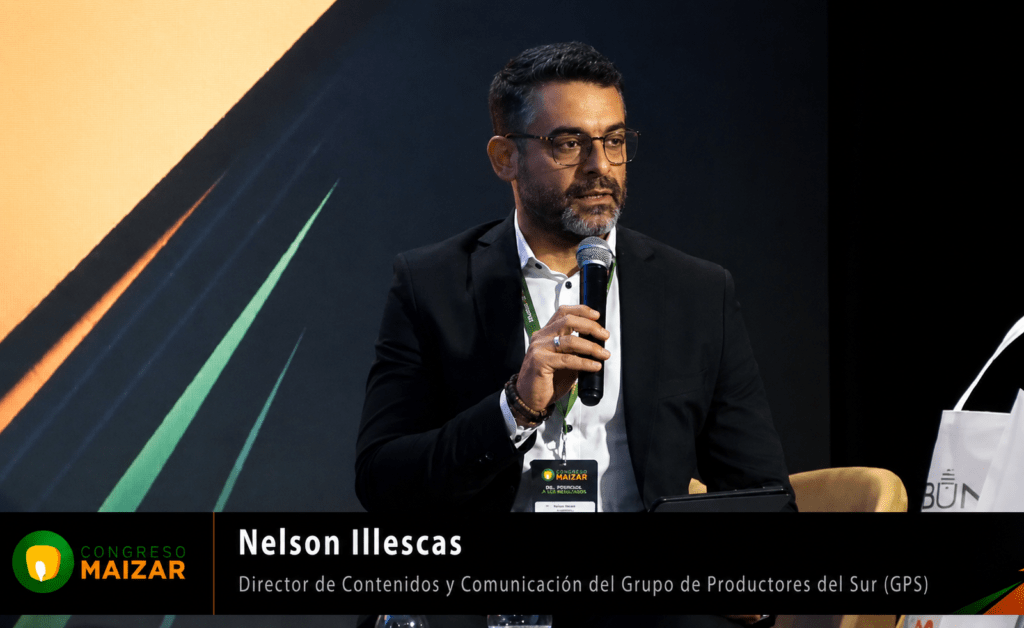
The panel, moderated by Nelson Illescas, Director of Content and Communication at GPS, concluded with a unified message and some clear guidelines. Geopolitics is the framework within which Argentina competes, and within that framework, security, energy, and technology are reshaping global trade priorities. The fragmentation of the international order opens niches and opportunities for reliable suppliers with certifiable attributes—precisely the profile that Argentina can cultivate.
This means shifting from competition based on price and volume to brands of origin, sustainability, and traceability, and recognizing that the bioeconomy is a strategic lever: corn is not just a grain, it's bioenergy and biomaterials. None of this will be possible without fiscal, institutional, and regulatory stability. The potential is there. The roadmap is there, too. What remains is the decision to act.
Watch the presentation