There are ways to explore integration and take advantage of its benefits.
O eixo da economia global já não atravessa o Atlântico. Durante anos, a região Ásia-Pacífico concentrou a maior parte do crescimento global, do investimento estrangeiro e da procura de alimentos, energia e minerais críticos. No entanto, o Mercosul continua a operar nessa região sem acordos preferenciais com a maioria dos seus parceiros mais dinâmicos: paga tarifas mais elevadas do que os seus concorrentes diretos, enfrenta maiores dificuldades de acesso e abdica de oportunidades de expansão do comércio e do investimento.
Together with Paloma Ochoa and Marcelo Regúnaga, we have prepared and published on the website of the Southern Cone Producers Group (GPS) the report “Mercosur–CPTPP (Comprehensive and Progressive Agreement for Trans-Pacific Partnership): A Necessary Convergence,” in which we describe this paradox and propose a roadmap to reverse it. The CPTPP currently comprises twelve economies—Australia, Canada, Chile, Japan, Mexico, New Zealand, Peru, Singapore, Vietnam, Malaysia, Brunei, and the United Kingdom—and represents almost 15% of global GDP. The diagnosis is clear: Mercosur is de facto integrated into this region, but not de jure, meaning it cannot acquire the benefits of the CPTPP.
An Australian beef exporter pays zero to enter Japan; an Argentine exporter faces a 38.5% tariff, which, under the CPTPP, decreases but stabilizes at a permanent floor of 9%. Brazilian chicken faces a 38.75% tariff in Malaysia, while its competitors in the agreement enjoy increasing preferences. We analyzed eight key products—beef, chicken, coffee, soybeans, flour, oil, wheat, and corn—and the conclusion is clear: the cost of not belonging to the CPTPP translates into lost sales—or sales at lower prices—and lost investments.
In 2024, Mercosur exported approximately US$68 billion to CPTPP members, resulting in a trade surplus. However, this result was achieved despite tariff disadvantages. If the bloc were to join the agreement, the competitive gap with Australia, New Zealand, Chile, and Peru would narrow, and export volumes could increase significantly.

"Mercosur is not just facing a trade decision. It is facing a strategic decision about what kind of actor it wants to be in the 21st-century global economy."
The CPTPP is also a new generation governance platform: digital trade, investments, intellectual property, public procurement, labor and environmental standards. Convergence with these standards would accelerate the regulatory modernization of the bloc, as is also planned in the negotiation process with the European Union.
active
Mercosur possesses a rare differentiating asset: it is the planet's largest reserve of water and protein, has critical minerals for the energy transition, and operates in a region free of armed conflict. In a world where security of supply is a priority, it can position itself as a reliable strategic supplier. Preferential access to CPTPP countries would allow for market diversification and thereby reduce the vulnerability generated by trade concentration: China currently absorbs more than 30% of the exports of some members of the bloc.
We propose three paths. The first—joining as a bloc—is the desirable but currently unlikely outcome, given that it requires an agreement on the bloc's trade integration strategies, which the divergences between Argentina and Brazil do not guarantee. The second—individual accession with coordination, the path Uruguay has already explored—is viable with explicit mechanisms, but risky without them. The third, and most realistic in the short term, is a framework agreement for gradual convergence on trade facilitation, sanitary standards, digital trade, and investment, which would reduce the regulatory gap and create conditions for progress; this is a path many Pacific economies have taken to reach comprehensive trade agreements.
Mercosur does not only face a commercial decision. It faces a strategic decision about what kind of player it wants to be in the 21st century global economy. It has the assets, the negotiating history and the markets that demand it. What has been missing is a common vision capable of transcending electoral cycles and the false illusions of protectionism.
The current context—a world that demands what the bloc produces, an expanding regional architecture, and accumulated negotiating experience—rarely presents itself with this intensity. Failing to capitalize on it would not only be a trade policy error: it would be another lost historical opportunity.
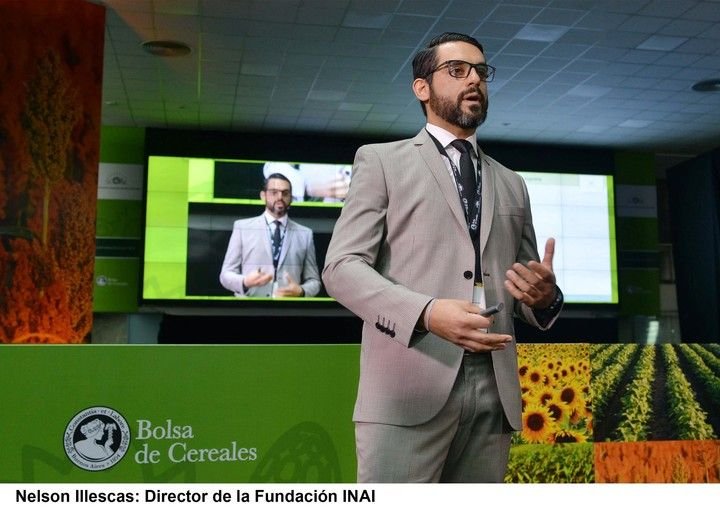
Nelson Illescas is co-author, along with Paloma Ochoa and Marcelo Regúnaga, of the report “Mercosur–CPTPP: a necessary convergence” (GPS, May 2026)
By Nelson Illescas
See the original article at La Nación.