Buenos Aires, August 26, 2026
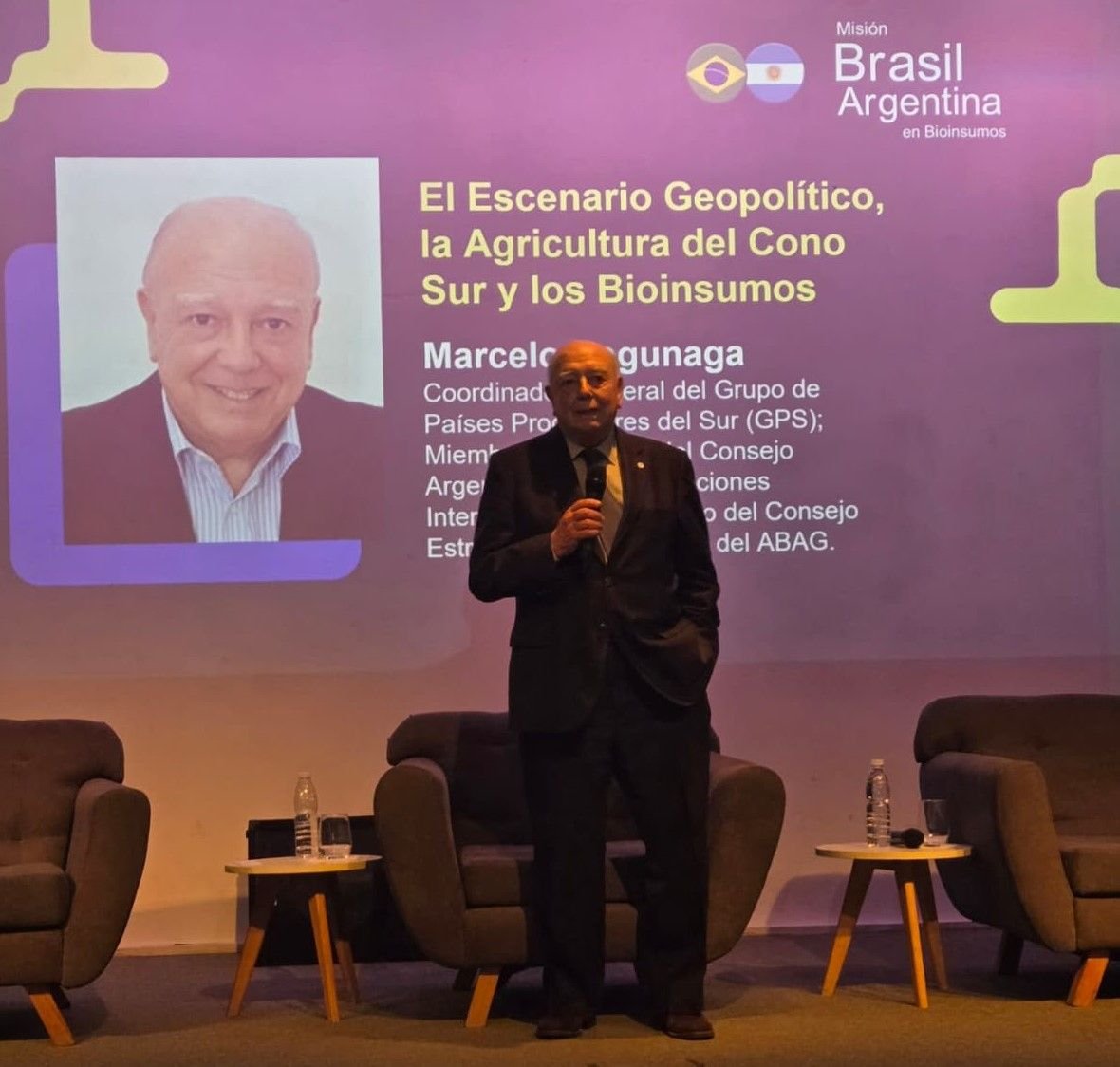
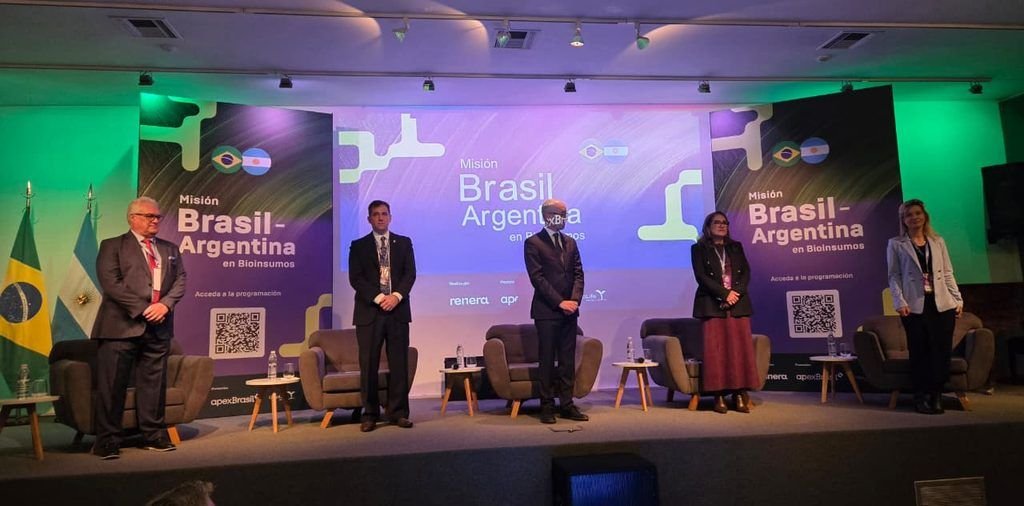
Marcelo Regúnaga presented on behalf of GPS at the technical seminar "Brazil-Argentina Dialogue on Bio-inputs," organized by the Brazilian Embassy in Buenos Aires. The meeting brought together specialists from both countries to analyze the geopolitical landscape of agricultural trade and the growing role of bio-inputs in the sector's sustainability.
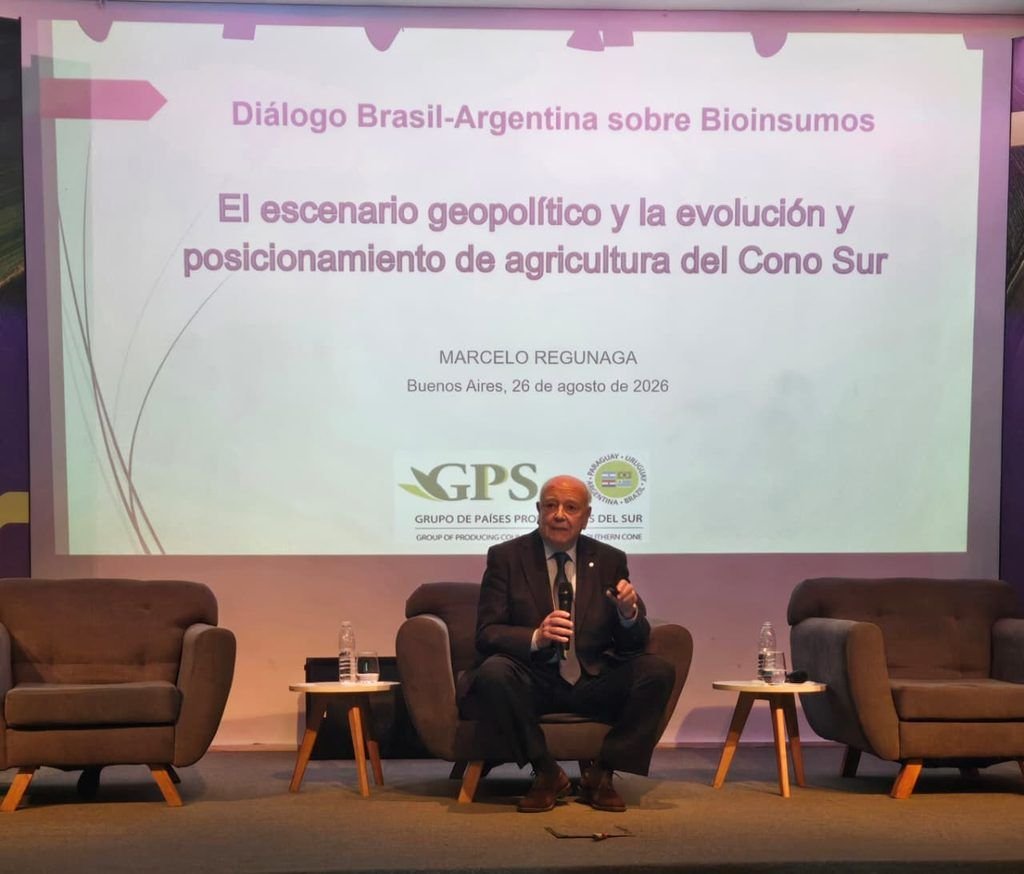
In the panel dedicated to the geopolitical context and the bio-inputs market, Regúnaga presented "The geopolitical scenario and the evolution and positioning of agriculture in the Southern Cone"He argued that the international order is shifting from multilateral rules to a logic of force and unilateralism, in a context marked by armed conflicts, logistical problems, the rise of new global actors—particularly in Asia—and increasing climate and environmental demands. He maintained that this disorder, far from being merely a threat, opens up concrete opportunities for the productive countries of the Southern Cone.
There, he identified three central axes of the new scenario: international trade is increasingly complex and costly, yet imports of food and bioenergy continue to grow; uncertainty and unilateral measures have become the norm in trade relations; and consumer demands—environmental, health, quality, and certification—continue to rise. For Regúnaga, each of these axes represents both a challenge and an opportunity for the region.
He also reviewed the technological evolution of agriculture in the Southern Cone —from mechanization and inputs in the mid-20th century (Agro 2.0) to direct seeding and biotechnology (Agro 3.0)— and noted that the region is entering a new stage (Agro 4.0), defined by soil and plant genetics, the development of biological solutions for carbon capture, big data, artificial intelligence and new markets for environmental assets.
Using data from the FAO and Insper Agro Global, the report showed that Argentina, Brazil, Paraguay, and Uruguay have steadily reduced carbon emissions per unit of agricultural output since 1960, while the region has expanded its net agricultural trade surplus, in contrast to the growing import dependence of other regions of the world. It emphasized that agriculture is the only economic sector that can capture carbon in an economically viable way, and that Argentina and Brazil have particularly high potential in this area.
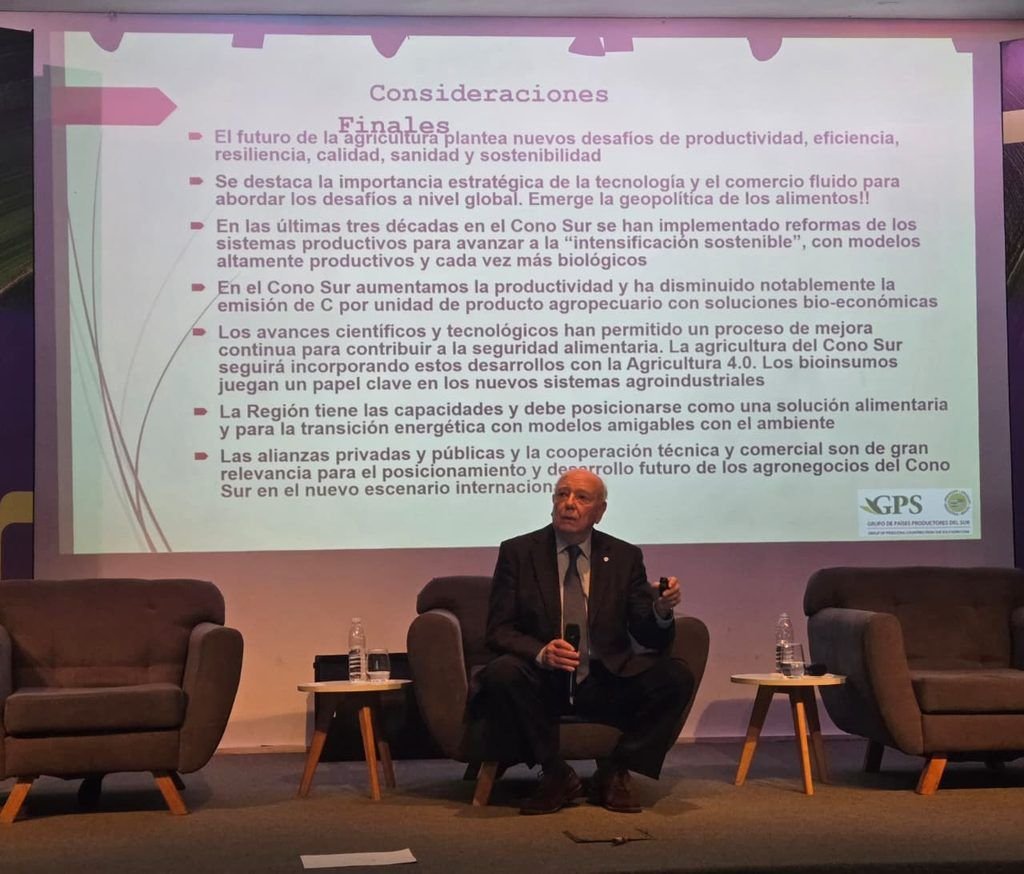
In his concluding remarks, Regúnaga emphasized that the Southern Cone has the capacity to position itself as a global solution for both food security and the energy transition, based on sustainable intensification models. He also highlighted the strategic value of public-private partnerships and technical and commercial cooperation—such as that promoted by GPS and ABAG in Brazil—to consolidate this position on the international stage.
The day, which lasted from 9 a.m. to 2 p.m., also included the institutional opening of the meeting, a presentation on bioeconomy and regional integration, a panel on quality, regulation and innovation in bioinputs with representatives from Brazil and the Province of Buenos Aires, and a business session with Brazilian solutions in the sector (Koppert and Ekoa), before closing with a camaraderie lunch.
A continuación se puede acceder a la presentación: