Regúnaga and Bisang analyzed changes in the business model within the agricultural sector, integration into global markets, and alliances for value creation.
Shifts in the global landscape are already impacting the agricultural sector's production structure, its business model, and the way companies engage with markets, the State, and local territories. This new landscape opens up opportunities to add value, expand international market integration, and generate an impact on the regions.
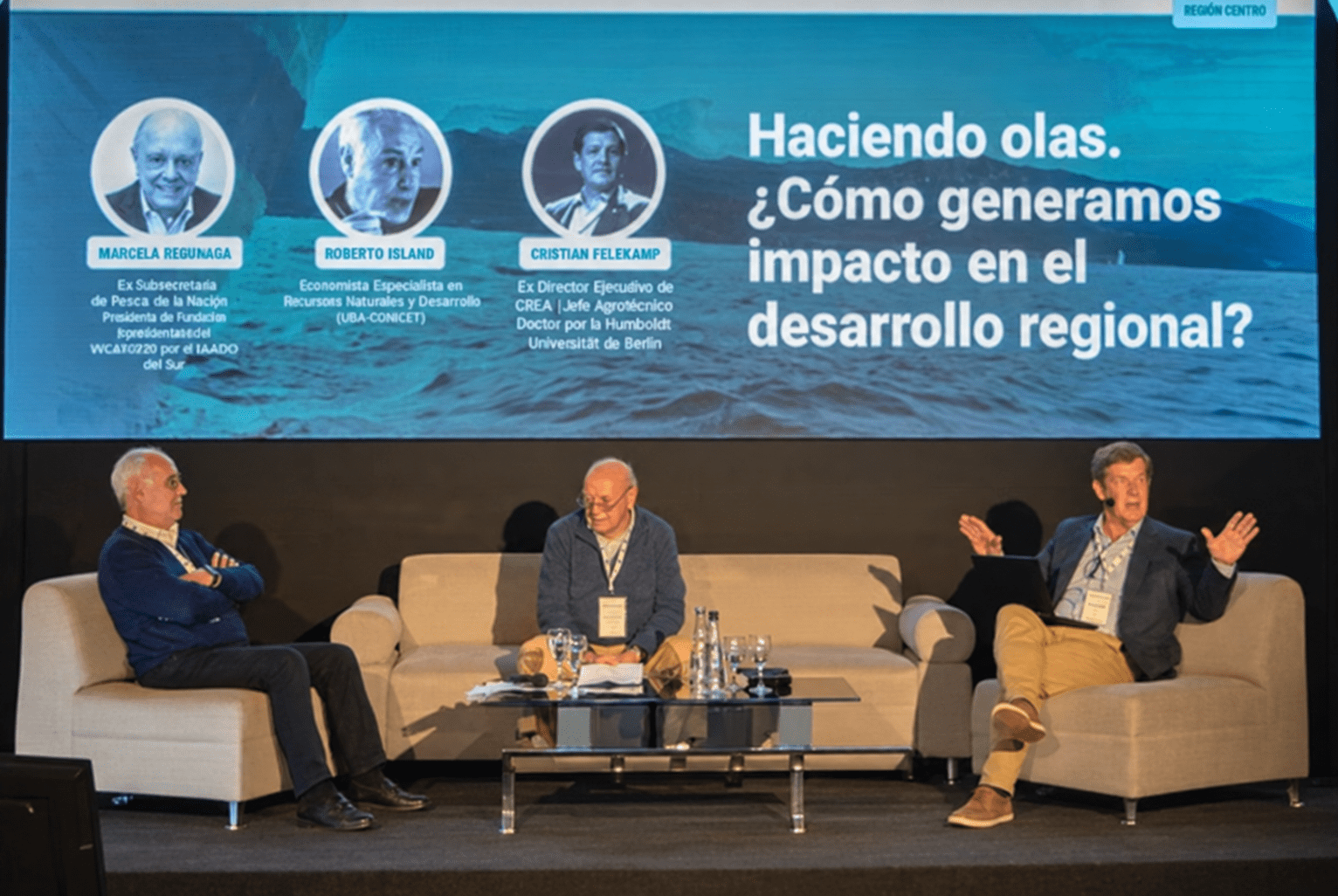
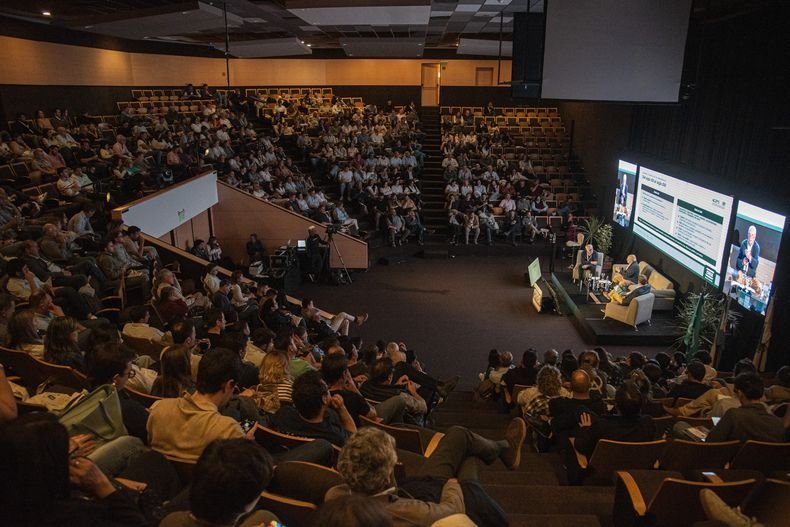
That was the central theme of the talk “How do we generate an impact on regional development?”, held as part of the CREA Regional Congress for the Central Zone in September in Potrero de los Funes, San Luis.
The event featured the participation of Marcelo Regúnaga, former National Secretary of Agriculture and a leading figure in agricultural policy, and Roberto Bisang, an economist specializing in bioeconomy and regional development at UBA and CONICET. The session was moderated by Cristian Feldkamp, former Executive Director of CREA.
Changes in the global order
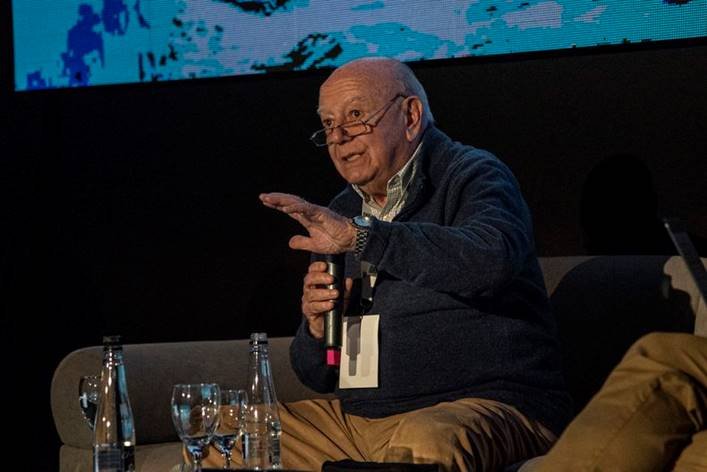
Regúnaga argued that one of the major changes in recent years is the declining influence of the multilateral order that emerged after World War II. Instead, major powers can alter trade conditions through political decisions.
“Today, it is not so easy to resort to dispute settlement mechanisms. This is a threat and part of the landscape we have to live with,” he maintained. Added to this are geopolitical conflicts, which affect trade flows, create barriers, and heighten uncertainty.
In this context, Argentina has an opportunity due to its location and productive capacity. “We are far removed from most armed conflicts, and we have a great opportunity to supply a world in disarray,” he stated. He also highlighted the growing importance of Asia and the potential of Africa as a destination.
Climate change adds another source of risk, and food security remains central. South America will play a major role as a net food exporter to Asia and, to a lesser extent, Africa. The energy transition expands the agricultural sector's scope beyond commodities and food.
The new landscape necessitates a re-examination of certain assumptions. For a long time, it was assumed that achieving competitiveness was sufficient to gain market access. “Today, one can be competitive and yet unable to access a market because a country decides, based on political considerations, not to permit such access,” he warned.
Alongside efficiency, relationships, partnerships, and trust are gaining importance. The question of what to produce has also changed. Volume remains relevant, but markets demand quality, safety, certification, and traceability. “People today don’t just want any food,” he noted. To the questions of how much, what, and how to produce, he added *who* and *with whom*.
Regúnaga maintained that a new global architecture does not yet exist. “We are in the midst of a storm, and we don’t know where it’s headed,” he said. Even so, he considered a return to the previous model unlikely. Quality, sanitary standards, intellectual property, and certifications also figure among the challenges to accessing more demanding markets.
The new agro-industrial map
Bisang stated that global change is also altering the agricultural sector's production structure. The industrial world is undergoing a revolution that is displacing traditional manufacturing and making way for activities linked to biology, energy, and new materials. Among the examples he cited were the industrial use of soybean oil to produce sustainable aviation fuels (SAF) and the advancement of green chemistry.
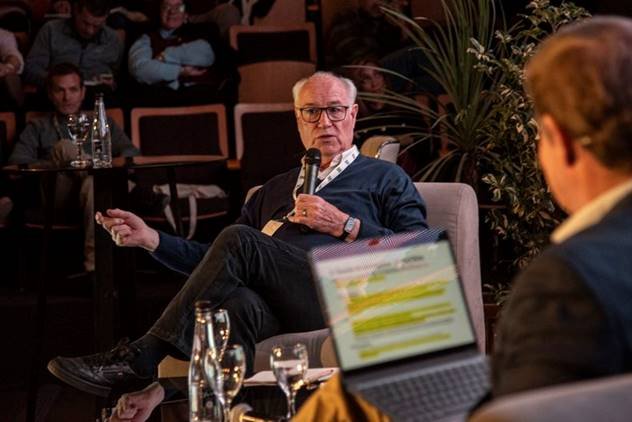
This process adds new demands on agriculture. In Argentina, the previous structure shows limits, while the sector advanced in industrial activities, with soybean grinding plants and large industrial complexes, such as Renova. A new business profile also emerged in the interior.
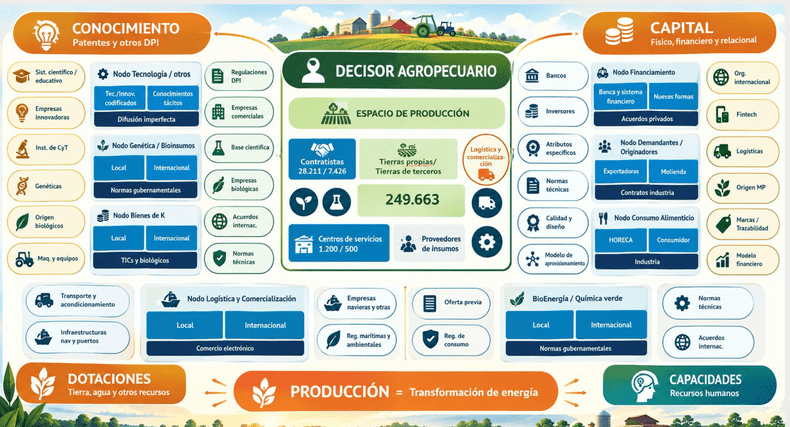
Bisang proposed conceptualizing this shift based on a figure distinct from the traditional producer: the agro-bioindustrial or bio-food entrepreneur. “The captain of that ship begins to question what his company does, how it does it, where, and for what purpose—moving beyond mandates and inherited practices,” he stated.
Production relies on genetics accumulated over 150 years, land, water, and physical, financial, and relational capital, as well as human capabilities. From this perspective, categories such as the primary sector, the agricultural sector, and industry are becoming increasingly less useful for explaining an activity that operates through a network of actors.
Two-thirds of the land is rented, a similar proportion of the fieldwork is handled by contractors, and a significant share of costs originates in the industrial sector. “Over the last 20 years, that has created a networked agricultural sector,” noted Bisang.
Within that network, it identified approximately 30,000 agricultural contractors, nearly 250,000 producers, and 1,500 service, input, and agribusiness centers. Added to these are players linked to credit, grain origination, consumption, bioenergy, logistics, capital goods, and technology, as well as inputs such as enzymes, bacteria, and yeasts.
The question is where to position oneself to capture more value. Bisang turned to the so-called “smile curve” to explain that production accounts for a smaller share of the final value. He estimated that the wheat producer receives between 10% and 12% of the value of a kilogram of bread. “It is far more advantageous to integrate and position yourself close to the consumer, because that is where the greatest profit lies,” he stated.
Finally, it estimated that between 3.6 and 4.2 million jobs are linked to that network, out of a total workforce of 12 million. This effect extends to commercial and service activities in cities connected to agricultural and livestock production.
International market: How to better integrate
In Regúnaga’s view, Argentina’s agricultural sector cannot remain on the sidelines of global changes. The sector generates surpluses and has always relied on foreign markets. The challenge is no longer merely about reaching out to the world, but about defining where to position oneself and with whom. “You cannot simply drift,” he maintained. This requires moving beyond an inward-looking perspective and coordinating the micro, meso, and macro levels through a shared strategy between the public and private sectors.
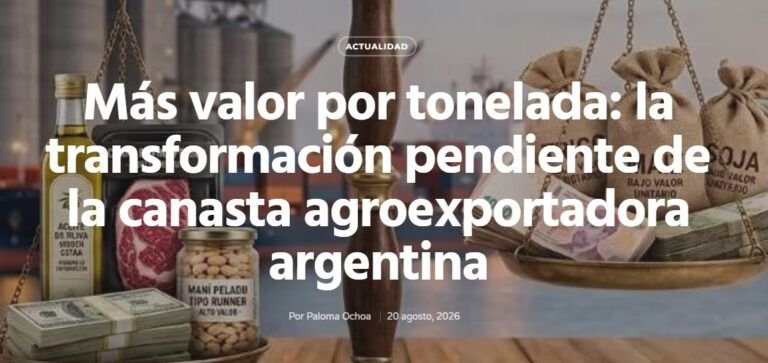
Regúnaga cited the case of Australia, where the average unit value of agri-food exports reached $792 per ton in 2025, compared to $397 for Argentina. Part of this difference is linked to greater public-private coordination regarding trade promotion, value addition, and the pursuit of better prices.
Bisang focused on companies that managed to integrate into the global market despite the macroeconomic instability of the last two decades. He cited experiences from the interior linked to peanuts and pistachios, as well as cases from Virasoro and Las Lajitas, as examples of global market integration with a strong territorial anchor.
Regúnaga outlined two paths to increase the value of exports. The first involves narrowing the price gap for products the country already sells by focusing on quality, certifications, traceability, and better market access conditions. The second aims to narrow the product-mix gap by increasing the share of products with higher unit values.
See the original article at Contenidos CREA