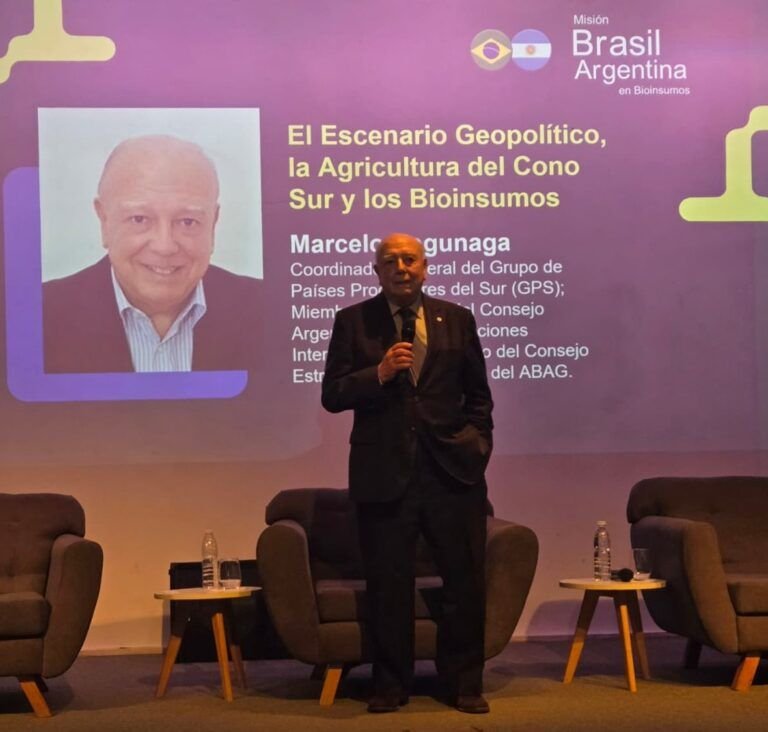
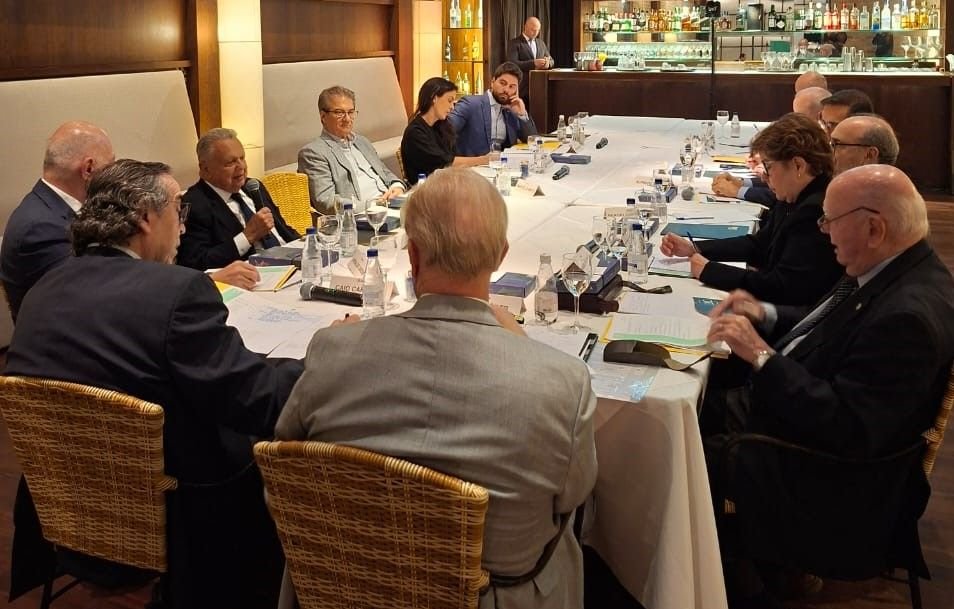
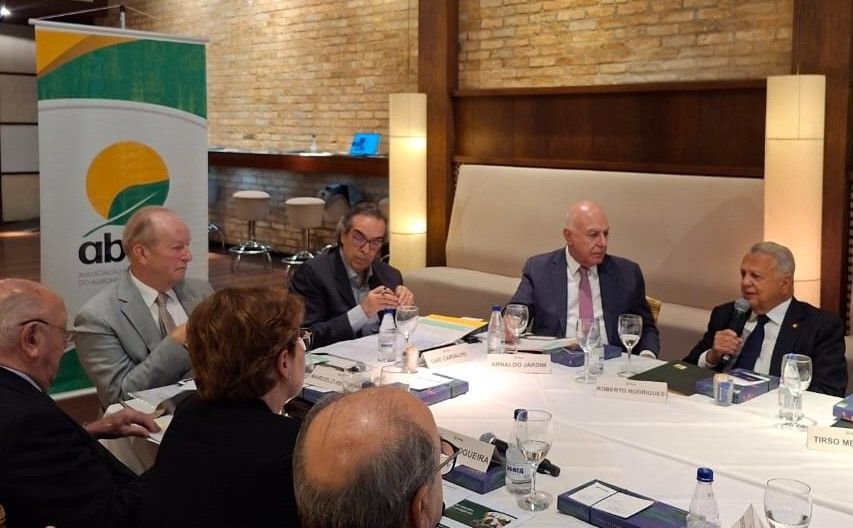
In March 2026, Engineer Marcelo Regúnaga (General Coordinator of GPS) participated in the 1st meeting of the High Level Strategic Council of the Brazilian Agribusiness Association (ABAG), which GPS leads in Brazil, in which former ministers, ambassadors, agribusiness legislators, directors of business associations from Brazil and the president of EMBRAPA participated.
In analyzing the international landscape, it was highlighted that the framework of multilateral institutions and rules agreed upon in the last century has changed substantially. This is a structural change devoid of international ethics, and there is no turning back in the near future. Today, political relations and security have emerged as high-priority factors, driven by a few countries.
This is reflected in a highly unpredictable trade environment, leading to greater risks and higher costs (operational, diversification, and hedging), making competitiveness and the positioning of regional production increasingly necessary as part of the solution to global food security. To this end, the strategic importance of sustainability, health and environmental safety, quality, and certifications is highlighted. There is a shift in the positioning of agriculture, from the economic to the strategic, and the geopolitics of food and bioenergy are emerging as key factors.
It was also noted that agricultural production is essentially an open-air factory, heavily impacted by climate change, leading to increased production and logistical risks. The region lacks robust risk management systems, which presents a growing challenge, as does the need for innovation that considers sustainability and resilience. This poses new challenges for EMBRAPA and SEBRAE in Brazil, and INTA in Argentina, highlighting the importance of improved public-private collaboration.
Given this scenario, the high priority of developing a communication strategy for international positioning was emphasized, highlighting MERCOSUR's role in global food security. This requires developing a narrative with a solid scientific foundation regarding the region's strategic role in global food security and bioenergy. In a context where the geopolitics of food is emerging as a priority, the region should be emphasized for its abundant availability of renewable water and fertile soils, and its potential contribution to food security and the energy transition.
In addition, given the decline of multilateralism and the diminished relevance of the World Trade Organization (WTO), a tactical pragmatism strategy was proposed for trade negotiations: promoting plurilateralism supported in part by WTO rules, or alternatively, bilateralism. The need for ambition and proactivity to diversify markets and products in the face of uncertainty was emphasized. Public-private partnerships at the regional and bi-regional levels are of great importance for developing the most competitive export-oriented agro-industrial chains in the region. The MERCOSUR-EU agreement and similar agreements offer promising opportunities for this.