According to industry experts, the agreement eliminates key tariffs, improves predictability, and can boost exports, investment, and competitiveness across different production chains.
After 25 years of negotiations, the European Union (EU) approved the free trade agreement with Mercosur in Brussels, a long-awaited decision that, while not implying an immediate leap in trade, does promise to consolidate clear rules, predictability and a new strategic framework for Argentina and the region.
For leaders in the production and export sectors, the political backing of the European bloc represents a key signal in a global context marked by trade fragmentation and the search for alliances among reliable partners. The agreement still needs to be signed and ratified by parliaments, but its initial approval marks a turning point for Mercosur, offering an opportunity to intelligently negotiate compensation (such as tax advantages, export certifications, and carbon credit issuance) for its contributions to climate change mitigation.
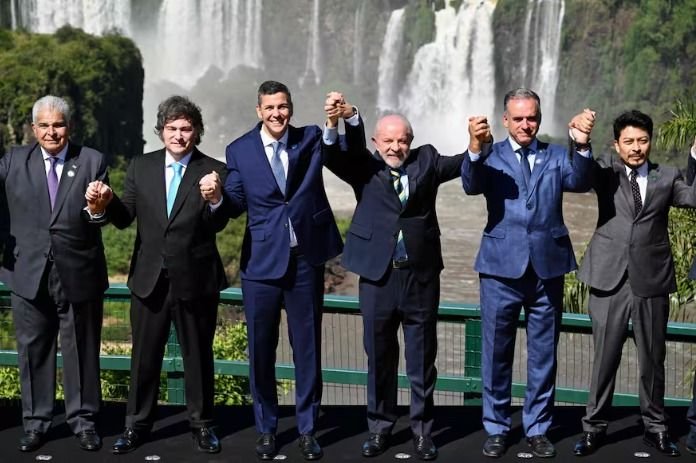
In that regard, European Commission President Ursula von der Leyen is expected to travel to Asunción in the coming days to sign the agreement that will link the European Union with Argentina, Brazil, Uruguay, and Paraguay. The treaty will then need to be approved by the European Parliament and the member states of the South American bloc.
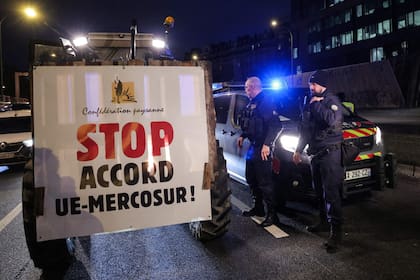
It's worth remembering that the European Commission has been negotiating this agreement since 1999. Its signing was nearly finalized last month in Brazil, but the necessary majority wasn't reached after Italy conditioned its vote on the approval of new support commitments for European farmers. That endorsement was crucial, as France, Austria, Hungary, Ireland, and Poland rejected the agreement, while Belgium abstained.
For Marcelo Elizondo, an international business specialist and a leading figure at the International Chamber of Commerce, the agreement is “a great opportunity.” He explained that the European Union, with 27 member countries, represents “more than 15% of the global economy” and has “some 500 million inhabitants, with a per capita income of around US$36,000.”
On the other hand, he pointed out that Mercosur, with four full members, has “260 million inhabitants and a GDP per capita of around US$10,000” and generates only “1.5% of total international trade.” “The asymmetry between the size of both blocs strengthens the value of the agreement for Mercosur,” he emphasized.
Elizondo emphasized that the pact is part of a consistent European policy, which has already led to agreements with Japan and Canada, and highlighted that it represents Mercosur's "first milestone in extra-regional institutional engagement." In this context, he maintained that the agreement could fundamentally alter the South American bloc's international standing.

Currently, Mercosur has an international trade-to-GDP ratio of less than 30%, well below the Latin American average (47%) and the world average (58%), and far from the European Union's 86%. "Brazil and Argentina are regularly among the ten most trade-closed countries in the world," he warned.
According to their estimates, the agreement could generate an increase in bilateral trade of up to 50% within a reasonable timeframe, due to the elimination or reduction of tariff and non-tariff barriers. Furthermore, an increase in European foreign investment in South America is expected, given that 25% of the global stock of foreign investment belongs to European companies: “The EU is already the largest foreign investor in Argentina, and this could increase.”
The agreement stipulates that the European Union will eliminate tariffs on 92% of exports from Mercosur —most immediately and others with deferred deadlines—, while Mercosur will do the same with 91% of its imports from the EU, excluding sensitive products.
For Argentine agricultural production, the agreement opens up concrete opportunities. “The opening of the European market from a tariff perspective is a great opportunity for Argentine products,” Elizondo stated, although he clarified that European non-tariff regulations will remain demanding.

In the case of beef, the impact is immediate. For Víctor Tonelli, a livestock consultant, this is “excellent news for the sector.” “The tariff on the Hilton Quota, which is currently 20%, will immediately drop to 0%,” he explained to LA NACION, representing “savings of over US$100 million” for the 29,500 tons that make up that quota.
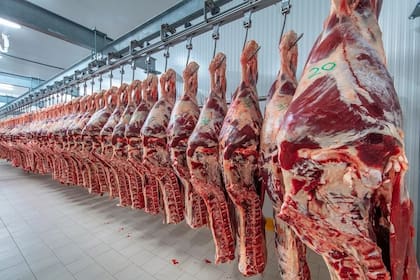
He also noted that this year Argentina exported approximately 60,000 tons of product weight to the European Union and that, with the implementation of the agreement, “66,000 tons duty-free” will be available for the four Mercosur countries, although its internal distribution still needs to be defined.
Similarly, Nelson Illescas, Director of Content and Communication for the Southern Producers Group (GPS), highlighted that the elimination of the Hilton Quota tariff "improves the price" for Argentine exporters, who account for almost 30,000 tons of that quota.
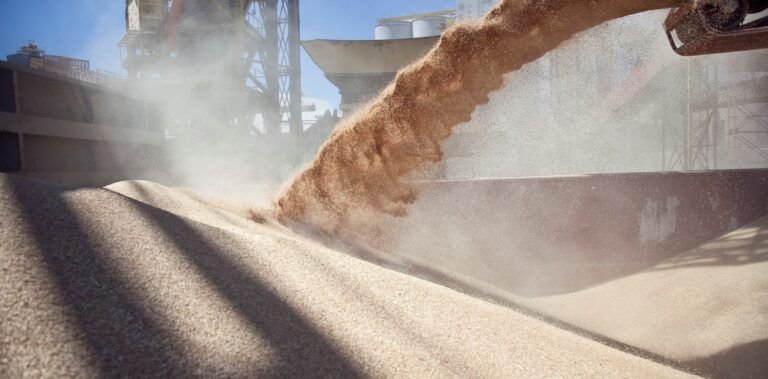
Illescas also highlighted the impact on soybeans and their derivatives, Argentina's main exports to the EU. The agreement includes a gradual reduction of tariffs and, in practice, of Export Duties (DEX). According to a document from the INAI Foundation of the Buenos Aires Grain Exchange, "starting in the fifth year after the agreement enters into force, the maximum DEX is set at 18%, meaning that no more than this amount can be charged on exports to the EU." Furthermore, from year seven, "the 18% cap begins to decrease linearly until it reaches 14% in year ten. Thus, by year ten, the maximum potential DEX on exports to the EU is 14%." Currently, export duties on soybeans are 24% (for whole beans) and 22.5% for byproducts (flour and oil, among others).
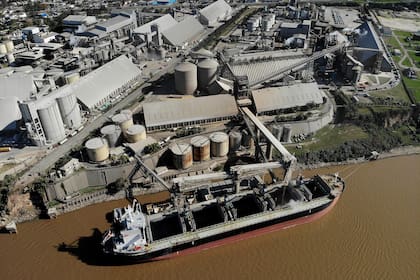
Meanwhile, “for meat, it will remain within the agreed quota amounts. And as for soybeans, growth is not expected to be too significant; rather, it will consolidate the current market,” Illescas said.
From the agribusiness sector, Gustavo Idígoras, president of Ciara-CEC, emphasized predictability. “It doesn't offer significant short-term benefits, but it does generate stability in market access for the next ten years,” he stated. He also highlighted the possibility of advancing “recognition of the equivalence of national systems and regulations.”
In that regard, he emphasized the importance of the agreement for environmental, social and health issues, by incorporating Mercosur into a group of preferential countries for the European Union.
Taking a more cautious approach, Mario Ravettino, president of the Argentine Beef Exporters Consortium (ABC), maintained that "we have to wait for it to be approved and implemented first," although he acknowledged that the impact on beef will be an expansion of quotas and the elimination of in-quota tariffs. "The effect on beef is an expansion of quotas by 54,000 tons carcass weight of chilled beef and 45,000 tons carcass weight of frozen beef, plus the elimination of in-quota tariffs for the four countries, nothing more," he concluded.
In this new scenario, Elizondo said: “The impact is very positive, although the growth in trade is not easily estimated. It could grow gradually as it comes into effect.”
Thus, after more than two decades of negotiations, the approval of the EU-Mercosur agreement opens a new chapter for Argentina. Beyond the immediate benefits, the consensus among experts is clear: the greatest value lies in predictability, the stability of rules, and the possibility of integrating the country into an international trade system increasingly based on strategic alliances.
READ THE ARTICLE FROM La Nación