Former Agriculture Secretary Marcelo Regúnaga commented that, “we have to pay more taxes than our competitors.”
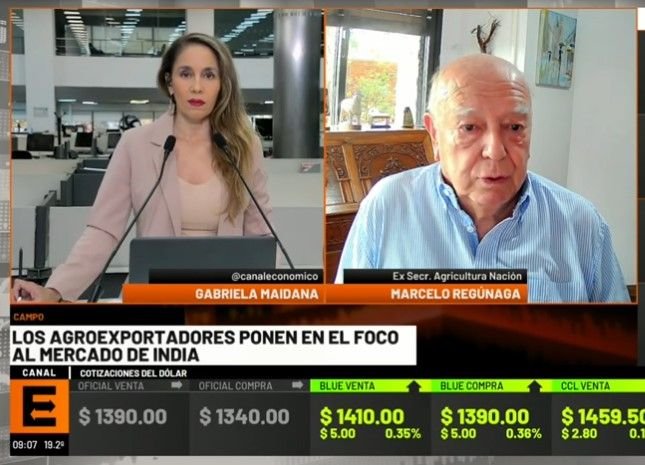
Former Secretary of Agriculture Marcelo Regúnaga discussed for Canal E the country's integration into the world, the limitations of Mercosur, and the need for a more aggressive export strategy.
“Argentina, when participating as part of Mercosur and defining Mercosur as a customs union, establishes that to negotiate free trade treaties, it is necessary to negotiate from Mercosur”, explained Marcelo Regúnaga. However, we note that, “we are one of the world's regions that have the least free trade agreements with different important markets”.
What are the agricultural problems?
Asimism, he says about the economic impact of this situation: “This implies that when we want to export, we have problems”. In this sense, it is clear that, “we have to pay more taxes than our competitors” and that is why “we ultimately receive lower prices for our products”.
For Regúnaga, the problem is double: internal pressure and external barriers. "We have two problems. The first problem is that we receive a lower price for the export right, and the second problem is that we receive a lower price for the international price that we pay because we have to pay import taxes in other countries", he said.
The reasons behind the lack of growth
And summarized the effect on the growth of the sector: “In short, Argentine agriculture receives much lower relative prices and therefore grows less than it could grow”.
The interviewee highlighted that the strategy must include a review of the regional scheme: “Argentina needs to have an international negotiation agenda”. He even opened the door to changes within the block: “We have to look for ways in which Mercosur becomes flexible and allows countries that want to sign treaties.”
More than anything else, I focus on internal weaknesses. “We have a foreign trade support structure that is much smaller than that of any of our competitors”, he stated.
See the original article at Perfil (E).